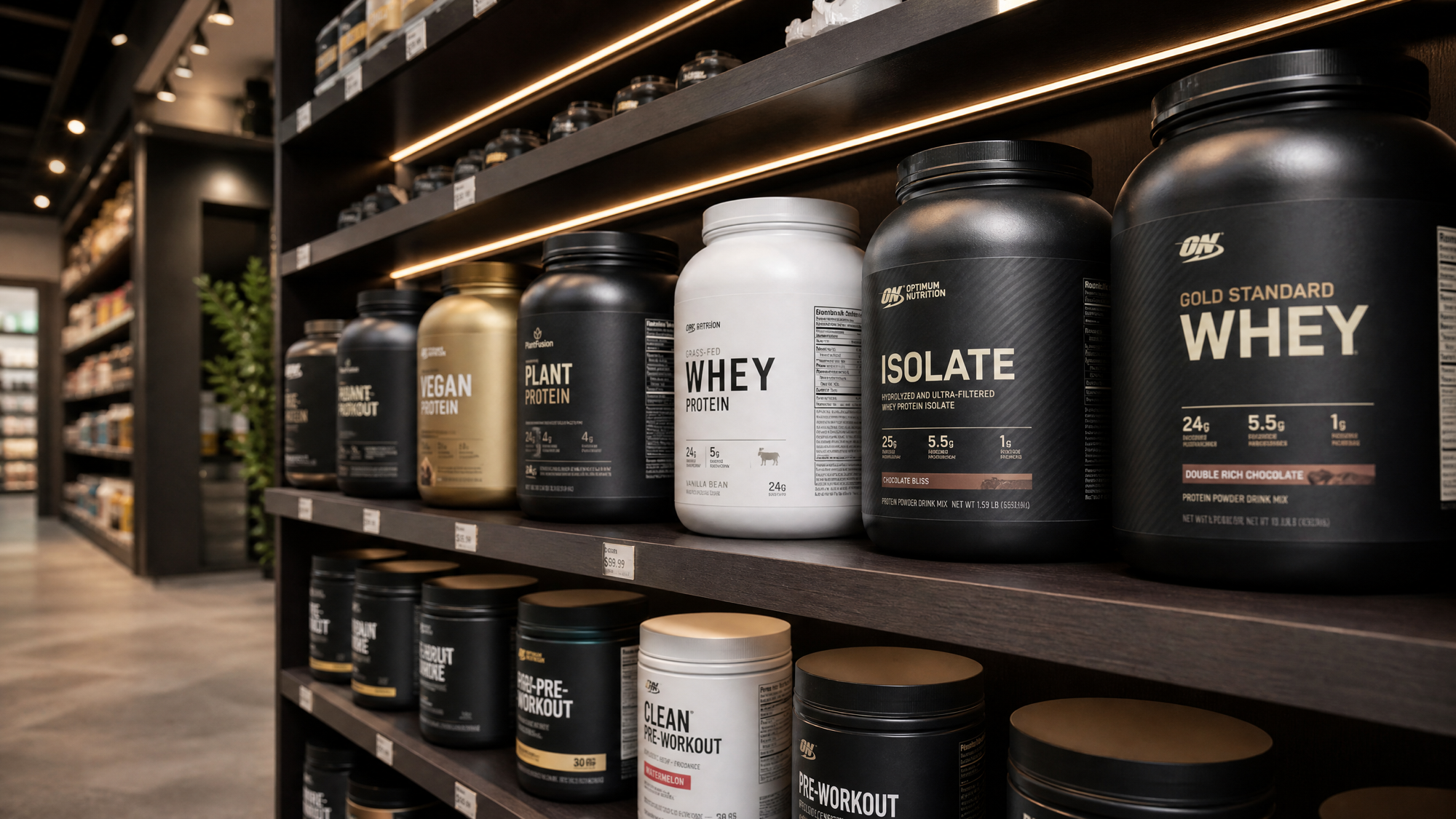
Walk into any health food store or open any fitness influencer’s social media feed, and you will be confronted with wall-to-wall shelves and aggressive labeling. Glossy tubs promise rapid muscle gain, effortless fat loss, laser focus, and superhuman recovery.
Unfortunately, much of the supplement industry operates on a foundation of marketing hyperbole and biased, low-quality research. If you strip away the multi-million-dollar advertising campaigns, you are left with only a small, elite group of substances backed by rigorous, peer-reviewed clinical evidence.
In sports nutrition, clinical efficacy is evaluated by examining whether a substance consistently delivers a statistically significant advantage under controlled human trials. To separate science from marketing myth, we look to reviews and consensus statements published by peak governing bodies—such as the International Society of Sports Nutrition (ISSN) and the International Olympic Committee (IOC).
This comprehensive guide explores the Top 5 Most Evidence-Backed Supplements in Fitness, explaining exactly how they work, how to use them safely, and—critically—the precise exercise timing strategy required to maximize their physiological benefits.
1. Creatine Monohydrate
If there were a hall of fame for sports supplements, creatine monohydrate would sit comfortably at the very center. It is arguably the most extensively researched and clinically validated ergogenic aid in human history. Over a thousand peer-reviewed studies have evaluated its performance, cognitive, and health benefits, establishing its safety and efficacy beyond a shadow of a doubt.
The Physiology: How It Works
To understand creatine, we must look at how our cells produce energy. During short-duration, high-intensity exercise (such as a heavy set of squats or a 100-meter sprint), your body relies on the ATP-PC (Adenosine Triphosphate-Phosphocreatine) energy system.
ATP is your body’s immediate currency of energy. When a muscle contracts, it cleaves off a phosphate molecule from ATP, converting it into Adenosine Diphosphate (ADP), a depleted energy molecule. The muscle cannot use ADP for further contraction.
This is where creatine comes in. By supplementing with creatine, you increase your skeletal muscle stores of phosphocreatine. This surplus of phosphocreatine rapidly donates its phosphate group to ADP, instantly regenerating it back into active ATP.
This rapid regeneration allows you to perform at maximum power output for several seconds longer before fatigue sets in. Over time, this allows you to complete more reps and move heavier loads, generating a greater stimulus for muscle growth (hypertrophy).
Basic Guidelines on How to Use It
Creatine is incredibly simple to use. The industry standard forms are numerous (creatine HCL, buffered creatine, creatine ethyl ester), but study after study shows that plain, affordable Creatine Monohydrate is the most bioavailable, stable, and effective option.
There are two standard dosing protocols:
- The Loading Protocol: Take 20g per day (split into four 5g doses) for 5 to 7 days to rapidly saturate your muscle stores, followed by a daily maintenance dose of 3 to 5g.
- The Steady State Protocol: Skip the loading phase entirely and consume a flat 5g every single day. This method takes longer to saturate your muscle stores (approximately 3 to 4 weeks) but is much gentler on the digestive tract for individuals prone to stomach upset.
Fitness Timing Strategy: When to Take Creatine
- Optimal Timing: Immediately Post-Workout (with minor flexibility).
- Why? Because creatine works via cellular accumulation rather than an acute stimulant effect, the exact time of day you take it is not as critical as consistent, daily dosing. However, clinical studies indicate a slight advantage to taking creatine immediately post-workout. During the post-exercise window, increased blood flow to skeletal muscle and heightened insulin sensitivity (especially when consumed alongside carbohydrates and protein) can enhance cellular uptake and retention.
2. Caffeine
While millions of people rely on caffeine to jumpstart their mornings, it is also one of the most powerful and immediate ergogenic aids in existence. Whether your goal is sprinting, weightlifting, or endurance running, caffeine possesses a deep, clinically documented ability to boost human capability.
The Physiology: How It Works
Unlike creatine, which operates directly in the metabolic energy pathway, caffeine’s magic happens primarily in the central nervous system (CNS).
Throughout the day, a neurotransmitter called adenosine accumulates in your brain, binding to its receptors and inducing feelings of fatigue, relaxation, and sleepiness. Caffeine’s molecular structure is remarkably similar to adenosine. When consumed, it crosses the blood-brain barrier and binds to adenosine receptors, effectively blocking adenosine from doing its job.
This blockade prevents the onset of fatigue and triggers a cascade of stimulatory neurotransmitters, including dopamine and noradrenaline. Consequently, caffeine decreases your Rate of Perceived Exertion (RPE). In simpler terms, a heavy lift or an exhausting run actually feels easier to your brain, allowing you to push closer to your true physical limits. Furthermore, caffeine enhances calcium ion release within muscle fibers, directly improving raw muscular contractility.
Basic Guidelines on How to Use It
To maximize performance benefits, the clinically validated dosage is 3 to 6 mg of caffeine per kilogram of body weight (3\text{--}6\text{ mg/kg}). For a 75 kg (165 lbs) athlete, this equates to roughly 225 to 450 mg of caffeine.
However, individual tolerance varies wildly due to genetic differences in the CYP1A2 enzyme, which is responsible for metabolizing caffeine. If you are highly sensitive, start at the lower end (1.5\text{--}2\text{ mg/kg}) to avoid jitteriness, elevated heart rate, and gastrointestinal issues.
Fitness Timing Strategy: When to Take Caffeine
- Optimal Timing: 45 to 60 Minutes Pre-Workout.
- Why? Caffeine is absorbed rapidly through the gastrointestinal tract, but it takes roughly 45 to 60 minutes to reach peak concentration in the bloodstream. Because caffeine has a relatively long half-life (typically 3 to 7 hours depending on the individual), consuming it too close to bedtime can severely disrupt sleep quality, which ultimately hinders muscle recovery and performance. Avoid high-dose caffeine within 6 to 8 hours of your scheduled sleep.
3. Protein Powder (Whey / Plant Isolates)
While technically categorized as a macronutrient food source rather than a pure chemical supplement, protein powders (specifically whey and high-quality plant-based blends like pea/rice isolate) are incredibly valuable tools for athletic progression.
The Physiology: How It Works
When you lift weights, you create microscopic tears in your muscle fibers. The body repairs and adapts to these tears through a process called Muscle Protein Synthesis (MPS). To trigger and sustain MPS, your body must have an abundant supply of the nine essential amino acids (EAAs), which it cannot manufacture itself.
Specifically, your body requires a high concentration of the amino acid leucine to act as a chemical key to turn on mTORC1, the primary master controller pathway for muscle growth. High-quality protein powders like whey isolate are rich in branched-chain amino acids (BCAAs)—and particularly leucine—making them exceptionally efficient at stimulating MPS compared to lower-quality, slower-digesting food sources.
Basic Guidelines on How to Use It
To optimize recovery and muscle growth, a general recommendation is to consume between 1.6 to 2.2 grams of protein per kilogram of body weight daily (1.6\text{--}2.2\text{ g/kg/day}).
Using protein powder is an incredibly efficient, cost-effective, and low-calorie way to hit this daily target. Single servings should ideally contain 20 to 40 grams of protein, which provides a sufficient quantity of leucine (typically 2 to 3 grams) to maximize the MPS signal—often referred to as reaching the "leucine trigger."
Fitness Timing Strategy: When to Take Protein
- Optimal Timing: Flexible, but ideally spaced every 3 to 5 hours.
- Why? The classic "30-minute anabolic window" myth has been largely debunked; the total daily protein intake is far more important for long-term growth than exact post-workout timing. However, for maximum biological efficiency, it is ideal to consume a protein serving within 1 to 2 hours post-exercise. Spacing your protein intake evenly throughout the day (rather than eating it all in one large meal) keeps muscle protein synthesis elevated.
4. Beta-Alanine
If you have ever taken a pre-workout supplement and felt a strange, tingling sensation on your skin, you have experienced beta-alanine. Behind this eccentric side effect lies a highly effective amino acid that plays a vital role in preventing muscular fatigue.
The Physiology: How It Works
When you perform intense, lactic-acid-producing exercise lasting between 1 and 4 minutes (such as high-rep weight training, rowing, or running a 400m-to-800m sprint), your body breaks down glucose rapidly for energy. This anaerobic process produces hydrogen ions (H^+).
As these hydrogen ions accumulate in your skeletal muscles, they lower the intramuscular pH, making the environment highly acidic. This acid build-up is the exact cause of the muscular "burn" you feel during intense efforts. High acidity interferes with muscle contraction and inhibits energy production, forcing you to slow down or stop.
Beta-alanine is the rate-limiting precursor to carnosine, a natural dipeptide found in muscle tissue that acts as a highly efficient acid buffer. By supplementing with beta-alanine, you increase your muscle's carnosine concentration, giving your body a vastly superior buffer to neutralize those fatiguing hydrogen ions, extending your time to exhaustion.
Basic Guidelines on How to Use It
To successfully elevate muscular carnosine levels, you need to supplement with 3.2 to 6.4 grams of beta-alanine daily.
The notable side effect of beta-alanine is paresthesia—a harmless, transient tingling sensation on the skin. If you find this sensation uncomfortable, simply split your daily dose into smaller portions (e.g., four doses of 1.6\text{g} taken throughout the day) or use a sustained-release formula.
Fitness Timing Strategy: When to Take Beta-Alanine
- Optimal Timing: Daily Consistency (Anytime) over Pre-Workout timing.
- Why? Similar to creatine, beta-alanine is an accumulation-based supplement. While many supplement companies market it as a pre-workout stimulant, it has no acute stimulant effect. What matters is taking it consistently every day to slowly build up muscle carnosine stores over a 2 to 4-week period. You can take it at any time of day that fits your routine.
5. Dietary Nitrates (Beetroot Juice / Extract)
Dietary nitrates, commonly sourced from beetroot juice, have emerged as a powerhouse supplement in both aerobic endurance and high-intensity resistance training.
The Physiology: How It Works
When you consume dietary nitrates (NO_3^-), bacteria in your mouth reduce them to nitrites (NO_2^-), which are then converted into Nitric Oxide (NO) in the acidic environment of the stomach and blood vessels.
Nitric oxide is a potent vasodilator. It relaxes the smooth muscle walls of your blood vessels, widening them. This vasodilation increases blood flow throughout the body, allowing for more efficient delivery of oxygen and nutrients to active muscle tissues, while speeding up the removal of metabolic waste products like lactate and carbon dioxide.
Additionally, clinical studies have shown that nitrates actually improve the efficiency of your mitochondria (the powerhouse of the cell), allowing them to produce more ATP per unit of oxygen consumed. This means you can perform the exact same physical workload while using less oxygen.
Basic Guidelines on How to Use It
To achieve performance benefits, you should consume between 300 to 600 mg of dietary nitrate. This is most commonly achieved by drinking 70 to 140 ml of concentrated beetroot juice shot (such as Beet It) or using concentrated beetroot powders.
Crucial Note: Because the conversion of nitrate to nitrite relies heavily on the healthy bacteria in your mouth, you should avoid using antibacterial mouthwash or chewing gum immediately after consuming nitrates, as this can destroy the bacteria needed to activate the supplement.
Fitness Timing Strategy: When to Take Nitrates
- Optimal Timing: 2 to 3 Hours Pre-Workout.
- Why? The biological pathway of converting nitrate into nitric oxide is a slow, multi-stage process. Blood levels of nitrite peak roughly 2 to 3 hours after ingestion. Therefore, to ensure maximum vasodilation and mitochondrial efficiency during your workout, consume your beetroot juice or nitrate supplement approximately 120 to 180 minutes before you begin exercising.
Conclusion: Build the Foundation First
While these five supplements are clinically proven, it is vital to keep their role in perspective. In sports science, supplements represent the "final 5%" of your progress. They are designed to supplement a healthy lifestyle—not replace it.
No amount of creatine or caffeine can make up for a poor diet, inadequate sleep, or inconsistent training. However, once you have established a solid foundation of progressive resistance training, a nutritionally rich diet, and 7 to 9 hours of quality sleep, utilizing these five highly evidence-backed tools will give you the precise biological edge needed to take your physical capabilities to the next level.