

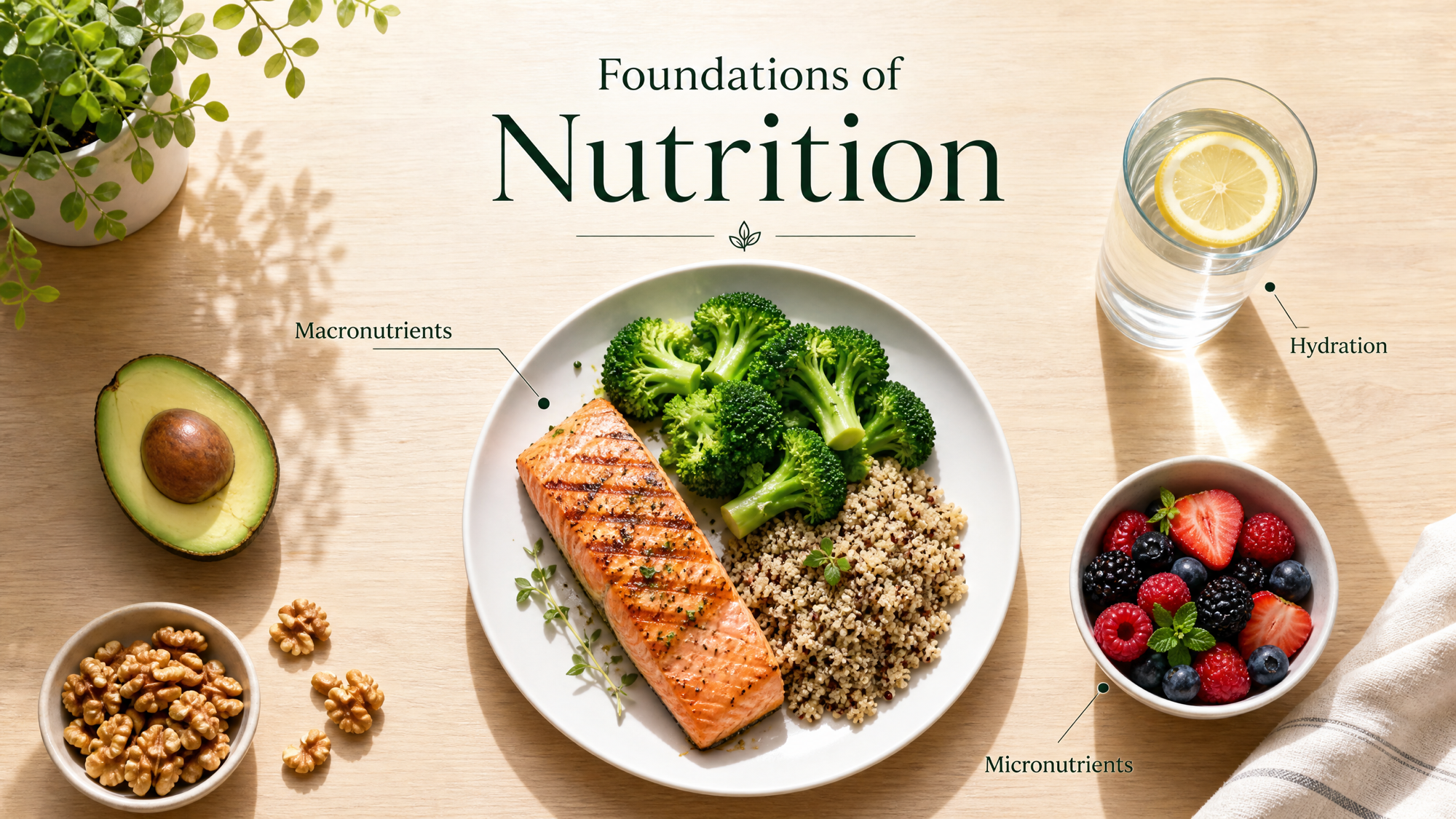
How to tune out the dietary noise, fuel your body with evidence-based science, and create a sustainable framework for real-world performance.
Walk into any grocery store, scroll through your social media feed, or strike up a conversation at a weekend barbecue, and you will be hit with an overwhelming amount of conflicting nutritional advice. One expert claims carbohydrates are the enemy; another insists a plant-based, raw-food diet is the only path to longevity. Someone else is fasting for twenty hours a day, while their training partner is eating six meals a day out of plastic containers.
It is exhausting. Worse, it makes something fundamentally natural—nourishing your body—feel like a complex math problem mixed with a test of extreme willpower.
When nutritional advice constantly swings between ideological extremes, it is easy to lose sight of the basics. But here is the truth that sports scientists, registered dietitians, and experienced coaches agree on: the human body thrives on nutritional foundations, not dietary extremes. Exceptional health, sustainable body composition changes, and athletic performance are built on a bedrock of predictable, evidence-based physiological principles.
Whether your goal is to drop twenty pounds, build lean muscle mass, or simply have enough energy to crush your morning workout and still chase your kids around the backyard, you do not need a restrictive lifestyle overhaul. You need a return to the foundations.
1. The Energy Balance Equation: Demystifying Calories
Before we can talk about superfoods, vitamins, or perfect meal timing, we have to address the law of thermodynamics. Total energy balance is the absolute baseline of the nutrition pyramid.
Every function of your body—from the beating of your heart to a heavy barbell squat—requires energy, measured in kilocalories (commonly just called calories).
- Caloric Deficit: When you consume fewer calories than your body expends, it must draw on stored energy reserves (mostly body fat, though muscle can also be broken down if the deficit is too severe or protein is insufficient). This leads to weight loss.
- Caloric Surplus: When you consume more calories than your body expends, the excess energy is stored for future use, resulting in weight gain (either as muscle mass if paired with progressive resistance training, or body fat).
- Maintenance Calories: When intake perfectly matches expenditure, your weight remains stable.
Many popular diets hide this reality behind rules and restrictions. For example, a ketogenic diet eliminates an entire macronutrient group (carbohydrates), which naturally makes it much harder to overeat. People lose weight on keto not because carbohydrates are inherently fattening, but because they inadvertently created a caloric deficit.
However, understanding energy balance is not just a call to "eat less and move more." It is an invitation to understand how your body expends energy. Your Total Daily Energy Expenditure (TDEE) is actually composed of four distinct parts:
- Basal Metabolic Rate (BMR): The energy your body needs just to keep you alive and functioning in a resting state (around 60–70% of your daily burn).
- Thermic Effect of Food (TEF): The energy required to digest, absorb, and process nutrients (around 10% of total daily energy expenditure).
- Exercise Activity Thermogenesis (EAT): The energy burned during intentional workouts, like running or lifting weights (usually only 5–10% of total daily burn).
- Non-Exercise Activity Thermogenesis (NEAT): The energy spent on everything we do that isn't sleeping, eating, or sports-like exercise—walking to your car, fidgeting, cleaning the house, and standing (this can vary wildly by hundreds of calories per day depending on your occupation and lifestyle).
When you understand that intentional exercise is only a small fraction of your daily energy burn, you realize that crash dieting and trying to "burn off" a bad meal on the treadmill is a losing battle. Instead, establishing a consistent, sustainable caloric baseline that aligns with your specific goals is step number one.
2. The Big Three: Understanding Your Macronutrients
While calories dictate whether you lose, gain, or maintain weight, macronutrients (protein, carbohydrates, and fats) dictate the quality of that weight change. They determine whether you lose body fat or lean muscle tissue, and how much energy you bring to your daily life.
Protein: The Structural Framework
Protein is the most critical macronutrient for anyone looking to change their body composition or improve physical performance. Made up of amino acids, protein acts as the literal building blocks for your muscles, skin, hair, organs, and enzymes.
From an evidence-based perspective, prioritizing protein offers three massive advantages:
- Muscle Retention and Growth: When in a caloric deficit, adequate protein intake signals your body to preserve muscle tissue and burn stored fat instead. If you are trying to build strength, dietary protein provides the substrate needed for muscle protein synthesis.
- High Satiety: Protein keeps you feeling full longer than carbohydrates or fats. It stimulates the release of satiety hormones like PYY and GLP-1 while reducing the hunger hormone ghrelin.
- High Thermic Effect: As mentioned above, digesting food requires energy. Protein has a thermic effect of roughly 20–30%. This means that for every 100 calories of protein you consume, your body burns about 20–30 calories just processing it. For comparison, carbohydrates require 5–15%, and fats require 0–3%.
Scientific consensus suggests that active individuals should aim for 1.2 to 2.0 grams of protein per kilogram of body weight (roughly 0.6 to 1.0 grams per pound of lean body mass) daily to optimize recovery and body composition.
Carbohydrates: The Preferred Fuel Source
Carbohydrates have been unfairly demonized in modern fitness culture, yet they are your body's preferred and most efficient fuel source. When you consume carbohydrates, your body breaks them down into glucose, which is either used immediately for energy or stored in your liver and skeletal muscles as glycogen.
For high-intensity training—like sprinting, heavy lifting, or functional fitness training—glycogen is gold. When your muscle glycogen stores are full, you can train harder, lift heavier, and recover faster. Carbohydrates also play a crucial role in sparing protein; when your body has ample glucose for fuel, it doesn’t have to break down valuable muscle tissue for energy.
Instead of cutting carbohydrates, the goal should be optimizing the type and timing of your carbs:
- Complex Carbohydrates: Foods like oats, brown rice, sweet potatoes, and quinoa break down slowly, providing sustained energy, stable blood sugar levels, and vital dietary fiber.
- Simple Carbohydrates: Foods like fruit, white rice, or targeted sports fuel digest rapidly. These are incredibly useful immediately before, during, or after an intense workout when your muscles require fast-acting energy and rapid glycogen replenishment.
Fats: The Regulatory System
Dietary fats are entirely distinct from body fat, and they are absolutely vital for optimal health. Dietary fat is a key player in hormone production (including testosterone and estrogen), cell membrane integrity, brain health, and the absorption of fat-soluble vitamins (A, D, E, and K).
Eliminating fat from your diet can cause significant issues with your endocrine system, leading to chronic fatigue, brain fog, and poor recovery. The key is focusing on high-quality sources:
- Monounsaturated and Polyunsaturated Fats: Found in extra virgin olive oil, avocados, nuts, seeds, and fatty fish (like salmon, which is packed with anti-inflammatory Omega-3 fatty acids).
- Saturated Fats: Found in meat and dairy. These are acceptable in moderation but should not make up the bulk of your fat intake.
- Trans Fats: Artificially hydrogenated oils often found in ultra-processed fried foods. These should be avoided entirely due to their well-documented links to cardiovascular disease.
3. Micronutrients and Hydration: The Cellular Machinery
If macronutrients are the fuel and building blocks of your body, micronutrients (vitamins and minerals) and water are the mechanical fluids that keep the engine running smoothly.
You can have your calories and macros perfectly dialed in, but if you are chronically dehydrated or severely deficient in micronutrients, your performance and well-being will suffer.
The Micronutrient Shift: Density Over Processed Convenience
Micronutrients do not provide caloric energy, but they regulate every metabolic process in your body. Magnesium supports muscle contraction and sleep quality; zinc boosts immune function; iron transports oxygen in your blood; and B-vitamins are essential for converting the food you eat into usable cellular energy.
The easiest way to guarantee proper micronutrient intake without tracking every single vitamin is to focus on nutrient density—eating a wide variety of whole, single-ingredient foods. A diet built primarily on whole foods naturally provides a full spectrum of micronutrients and dietary fiber, which supports gut health and regular digestion.
A good rule of thumb is the "80/20 rule": derive at least 80% of your daily food intake from minimally processed, whole food sources (things that grew in the ground or walked on the earth), leaving up to 20% for flexibility and enjoyment. This prevents nutritional deficiencies while protecting you from the psychological burnout of restrictive dieting.
Hydration: The Invisible Performance Enhancer
Dehydration is one of the most common, yet easily correctable, roadblocks to optimal physical performance. A fluid loss of just 2% of your body weight can result in a 10–20% drop in athletic performance, alongside decreased cognitive function, increased perceived exertion, and slower recovery times.
Water regulates your body temperature, lubricates your joints, and transports nutrients into your cells. For active individuals, hydration goes beyond just drinking plain water; it also involves managing electrolytes (sodium, potassium, and magnesium) lost through sweat.
Instead of waiting until you are thirsty—which is a sign that you are already mildly dehydrated—make hydration a baseline daily habit. Aim for a baseline fluid intake that keeps your urine a pale, straw-like color throughout the day.
4. The Pitfalls of "Clean Eating" and Extreme Restricting
Many people struggle with nutrition not because they lack discipline, but because they have fallen victim to the "clean eating" trap. This mindset labels foods in binary terms: foods are either "good" or "bad," "clean" or "dirty."
While this sounds healthy on the surface, it often breeds an unhealthy, rigid relationship with food. It fosters guilt around eating, leads to social isolation, and frequently triggers a classic "all-or-nothing" cycle:
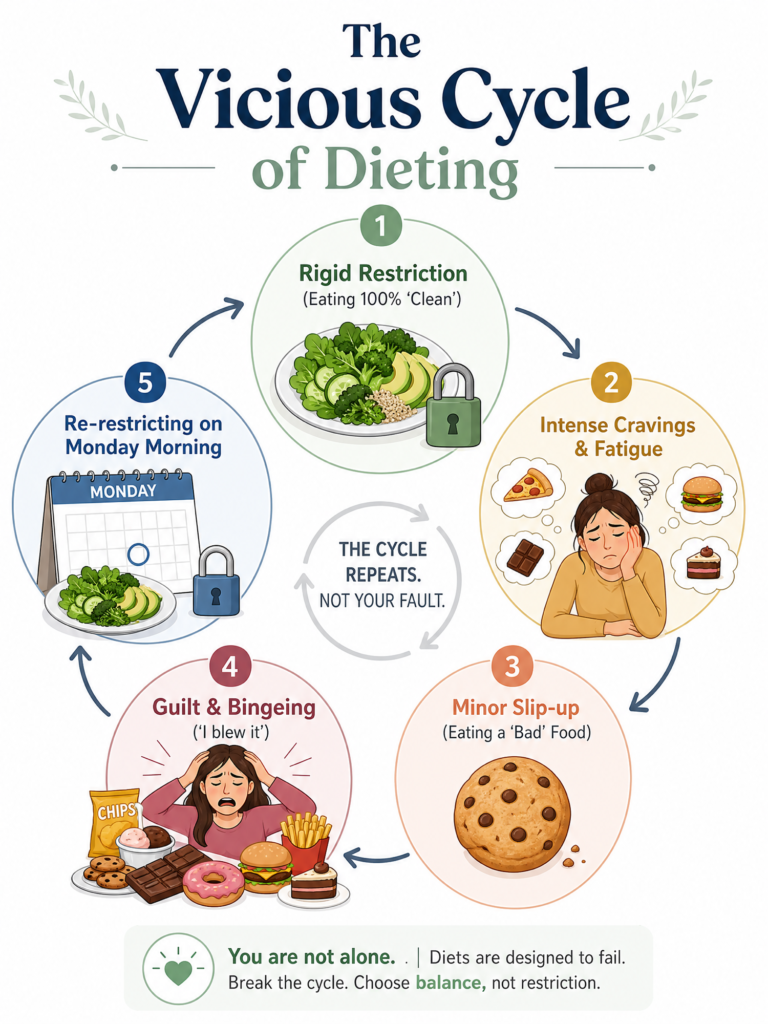
This cycle is exhausting and fundamentally unsustainable. Your body does not view food through a moral lens. It views food as energy, amino acids, fatty acids, vitamins, and minerals.
Achieving your health and fitness goals does not require absolute perfection; it requires consistency over time. True nutritional mastery means being flexible enough to enjoy a slice of pizza or a birthday celebration with family, knowing that a single meal cannot undo weeks of consistent, foundational habits.
5. The 5-Step Framework to Transform Your Nutrition Today
You do not need to rewrite your entire grocery list tonight. Instead, implement this evidence-based, 5-step framework to build a rock-solid nutritional foundation starting with your very next meal.
Step 1: Establish Your Protein Baseline
Stop guessing if you are eating enough protein. Look at your plate at every meal and ensure there is a dedicated, palm-sized source of high-quality protein present.
- Action: Target 25–40 grams of protein per meal. Excellent options include chicken breast, lean beef, turkey, eggs, wild-caught fish, tofu, or a high-quality whey/plant protein isolate. If you graze on snacks, swap out chips or pastries for Greek yogurt, cottage cheese, or jerky.
Step 2: Hydrate Before You Caffeinate
Many feelings of mid-day fatigue, artificial hunger, and sluggishness are actually just mild dehydration. Before you reach for a second cup of coffee or a sugary energy drink, rehydrate your system.
- Action: Keep a reusable water bottle with you throughout the day. Drink 16–20 ounces of water immediately upon waking up to jumpstart your cellular hydration, and aim to drink consistently between meals.
Step 3: Fill Half Your Plate with Color
Instead of obsessing over what to cut out of your diet, focus on what you can add in. Increasing your intake of fruits and vegetables naturally crowds out calorie-dense, nutrient-poor processed foods while flooding your system with vitamins, minerals, and water.
- Action: At lunch and dinner, visually divide your plate. Fill 50% of it with colorful, non-starchy vegetables (like spinach, broccoli, peppers, Brussels sprouts, or asparagus) or fresh fruit.
Step 4: Swap Ultra-Processed Carbs for Complex Sources
You don’t need to stop eating carbs; you just need to choose sources that work for your energy levels rather than against them. Swap out refined sugars and white flours that cause blood sugar spikes and crashes for slow-digesting, fiber-rich alternatives.
- Action: Trade white bread, sugary cereals, and processed snack bars for whole-food alternatives like rolled oats, sweet potatoes, brown or jasmine rice, and quinoa. These keep your energy levels steady and your performance high.
Step 5: Plan and Prep Two Critical Windows
The majority of nutritional slip-ups happen when you are caught off guard—starving after a long workday or rushing out the door in the morning with zero healthy options available. You don't need to spend your entire Sunday prepping identical meals for the week; you just need to secure your most vulnerable time windows.
- Action: Identify the two times during the week when you struggle most with food choices (e.g., weekday lunches or mid-afternoon snacks). Dedicate just one hour a week to prepping healthy options specifically for those windows, such as pre-chopping veggies, cooking a batch of chicken, or portioning out nuts and fruit.
Building Strength From the Inside Out
Nutrition does not exist in a vacuum. The food you put into your body is the direct counterpart to how you move, lift, and recover. You can have a world-class training program, but if your nutrition is chaotic, you will constantly feel like you are driving with the parking brake engaged. Conversely, when your nutrition is dialed in, your energy skyrockets, your recovery shortens, and your strength in the gym reaches entirely new heights.
If you are ready to stop guessing, cut through the fitness industry nonsense, and experience what purposeful training and supportive community look like, come visit us at Virtuous Gym in Silverdale, WA.
We specialize in group fitness and hybrid strength training designed for real people who want to build real-world strength in a completely ego-free environment.
Our expert coaches don’t believe in one-size-fits-all programs or extreme crash diets. We meet you exactly where you are, teaching you the why behind every movement and helping you build sustainable, lifelong habits.
No Comments.